


Knowledge of Garbage Classification
Household garbage is generally classified according to recyclables, hazardous waste, food waste, and other garbage. It is important to remember the signs for the four categories of garbage!
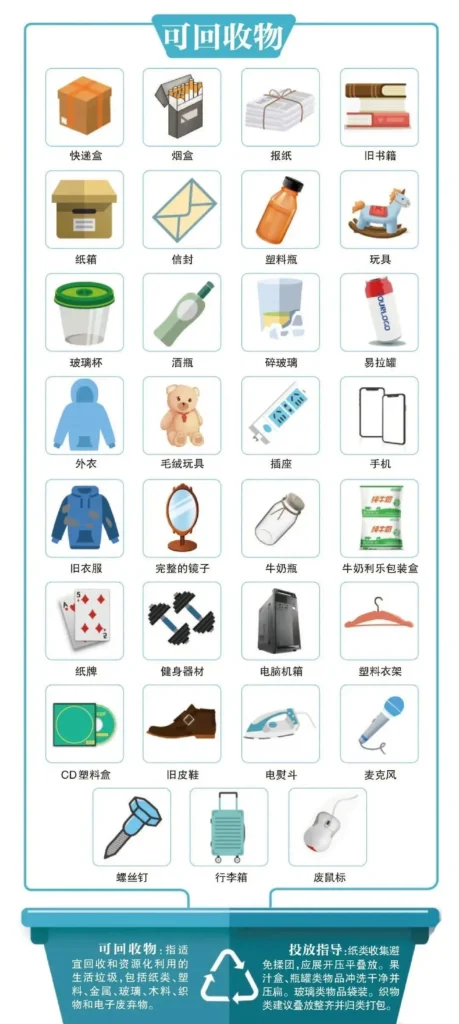
Recyclables
可回收物就是再生资源,指生活垃圾中未经污染、适宜回收循环利用的废物,是现阶段生活垃圾分类的主要工作和影响垃圾减量的重要因素。主要包括:废旧的玻金塑纸织等五类,即玻璃,金属,塑料,纸张,织物。
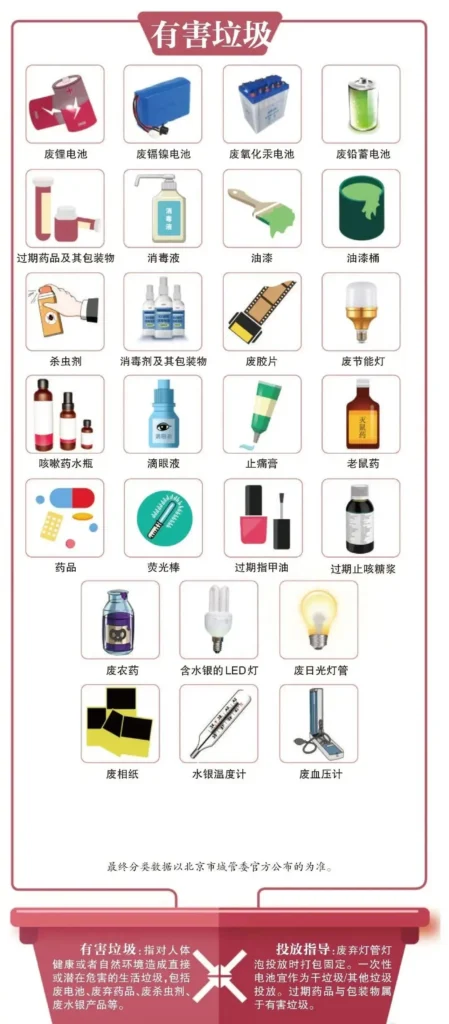
Hazardous Waste
有害垃圾,指生活垃圾中对人体健康或自然环境造成直接或潜在危害的物质,必须单独收集、运输、存贮,由环保部门认可的专业机构进行特殊安全处理。
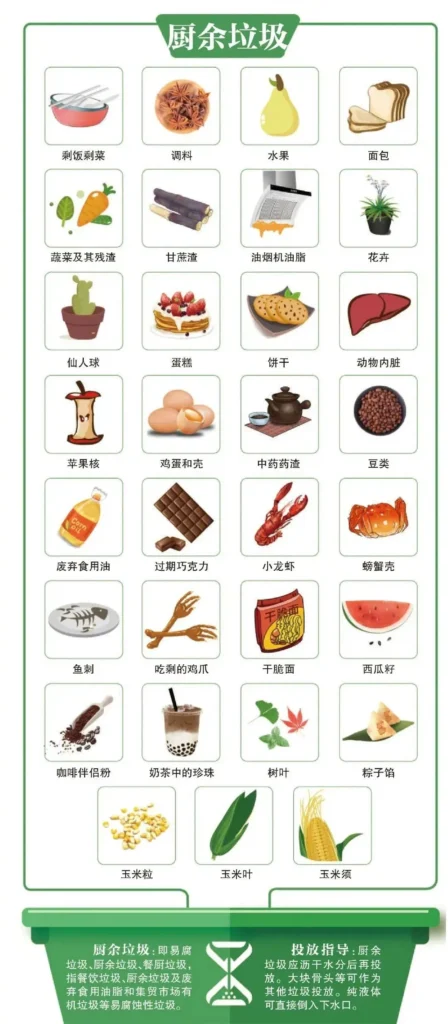
Kitchen Waste
公共机构产生的厨余垃圾,主要为食堂剩菜、剩饭及烹饪过程中产生的菜帮菜叶、肉类鱼虾废弃部分、蛋壳等,做到 “日产日清”。纸巾、牙签等不可生化降解,需与厨余垃圾分开投放。
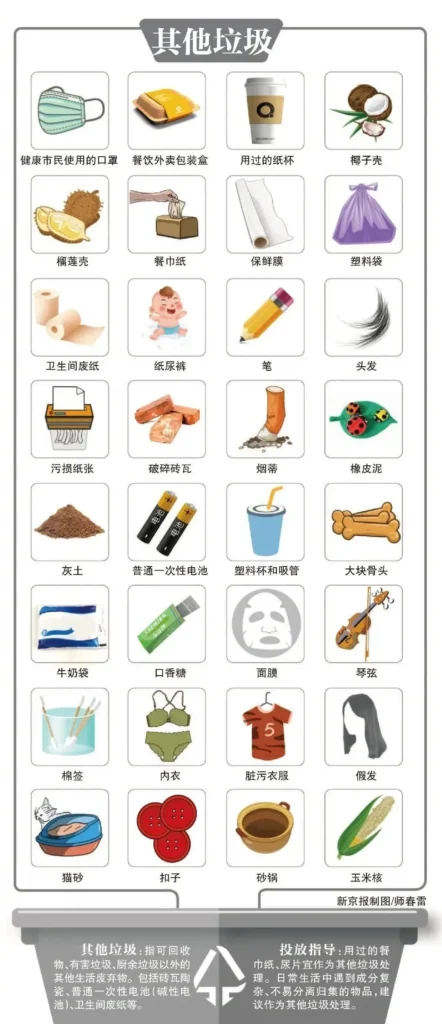
Other Waste
纸类、塑料类、玻璃类、金属类废弃物中不可回收的部分。纺织类、木竹类废弃物中不可回收的部分,如拖把、抹布、牙签、一次性筷子、树枝等。灰土类、砖瓦陶瓷类废弃物、其他混合垃圾,如清扫渣土、陶瓷碗碟、大块骨头、植物硬壳、枯萎花草等。
What waste is this? Use Our AI Trash Recgnition Site to Check!
Suzhou SIP Industrial and Residential Sewage Processing
The sources of sewage include pre-treated industrial wastewater from more than 8,000 enterprises in SIP and residential sewage from 360,000 households.
After a set of treatment processes, sewage will accept five key indicators of testing. All test indicators must meet the discharge standards, that is, discharged into the urban sewage network. The factory’s sewage treatment COD chemical oxygen demand indicator is 356 milligrams per liter, usually under the circumstances of the sewage pipe discharge standards is 500 milligrams per liter. Total phosphorus and total nitrogen detection instrument measured the total phosphorus content is currently 3.56 milligrams per liter, usually under the circumstances of the pipe standards in 8 milligrams per liter or so. Another indicator is the dissolved oxygen of the water, normal to be greater than 1.5 milligrams per liter, the treatment factory test showed 6.73 milligrams per liter, fully meet the requirements.
After the completion of sewage treatment precipitation sludge is not waste. After drying and processing, it can be converted into dry sludge for the power factory next to the incineration of power generation to further realize the recycling of resources. The calorific value of dry sludge is about 2500 calories, equivalent to half of the calorific value of standard coal. The factory mixes it with coal, incineration and power generation of waste resource utilization, daily processing of 500 tons of a wet sludge scale.
Suzhou SIP Kitchen Waster and Green Waster Processing
There is a special kitchen waste treatment facility in the Circular Economy Industrial Park, which is responsible for the kitchen waste of more than 7,700 merchants and 480 districts in SIP, and handles about 500 tons of kitchen waste every day. About 10~15% of kitchen waste that can not be processed, will be transported to the waste incineration factory for incineration. The remaining 90% of all resources will get recycled. So after digestion, this part of the residue can be made into nutrient soil, used in the SIP’s green composting. This part of the gaseous, through the fermentation of liquid oxygen, can be made into biomass natural gas, then and to the city pipeline network. At the same time, the methane liquid will be discharged to the sewage factory to meet the standard after it reaches the standard of pipeline.
In addition to kitchen waste, green waste such as pruned green branches and fallen green leaves in the part are also recycled. After being processed by professional equipment, these green wastes are processed into biomass fuel rods, a few centimeters long, with a calorific value of between 3,000 and 3,500 calories, equivalent to lignite with a lower calorific value, which can be used as fuel for thermal power factories. The current market price of the produced fuel rods is about 700~900 dollars per ton. According to the disposal scale of the factory, 100 tons of green waste can be processed every day, and about 10,000 tons of biotherapeutic fuel rods can be made throughout the year.